
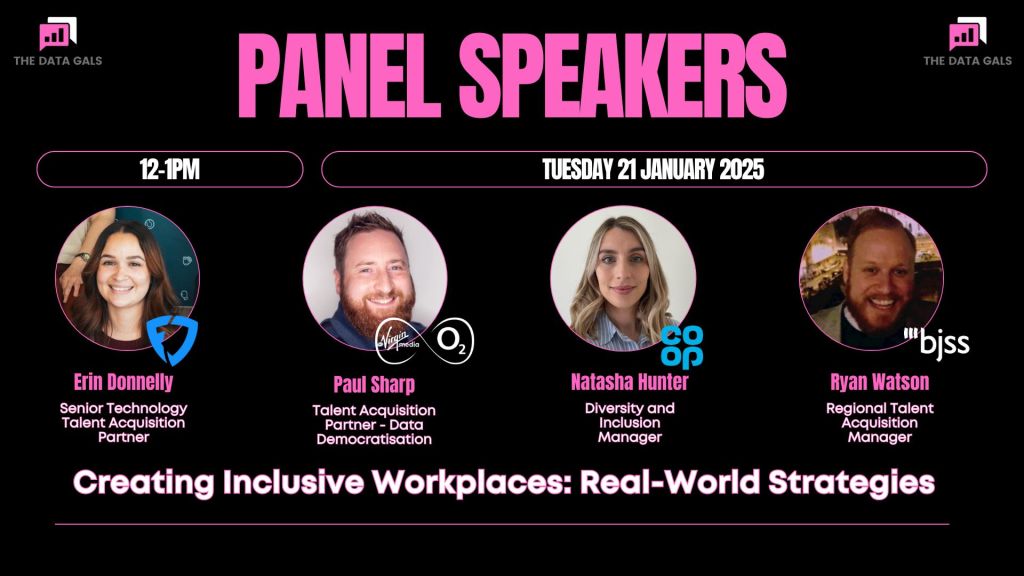
In today’s rapidly evolving work environment, fostering diversity, equity, and inclusion (DEI) is more important than ever. At The Data Gals’ recent event, Creating Inclusive Workplaces: Real-World Strategies, industry leaders came together to discuss the challenges, trends, and strategies for building a more inclusive workforce. From diverse talent solutions to leadership roles, here are some key takeaways from the insightful discussion which tackle the challenges facing women in tech.
Understanding DEI Challenges and Trends
Paul Sharp, a talent acquisition partner at Virgin Media, highlighted some of the biggest barriers to workplace diversity. A major issue remains the limited pipeline of diverse candidates in data and AI fields, often due to systemic barriers such as unequal access to education and lack of representation.
“While we’ve seen improvements, there are still significant challenges in increasing diversity in data and AI roles,” Paul explained. “Many underrepresented groups face systemic barriers, including limited access to education and fewer role models in the field.”
Moreover, rigid job requirements can discourage candidates from underrepresented backgrounds from applying, particularly women, who studies show are less likely to apply unless they meet nearly all listed criteria. Addressing these barriers requires proactive steps, including revising job descriptions and ensuring fairer hiring processes.
Erin Donnelly, Senior Technology Talent Acquisition Partner at FanDuel, emphasised the importance of structured approaches, stating, “You can’t boil the ocean. Start small, be specific, and build out from there.”
Tackling Unconscious Bias in Hiring and Workplace Culture
Ryan Watson, Regional Talent Acquisition Manager at BJSS, emphasised that eliminating unconscious bias requires a multifaceted approach. “Structured hiring processes are essential,” he noted. “If we don’t have clear scoring systems in place, bias—whether intentional or not—can creep into hiring decisions.”
Strategies include using gender-neutral language in job postings, anonymising applications, and implementing structured interviews with clear scoring metrics. Additionally, fostering a culture of psychological safety—where employees feel valued and secure—can significantly reduce bias in decision-making and improve retention.
Erin Donnelly highlighted another key factor: “Hiring managers should utilise tools like gender decoders for job descriptions and anonymising tools in recruitment processes to eliminate unconscious bias.”
Promising DEI Approaches for 2025
The panel explored upcoming trends in DEI, particularly the use of technology and data analytics to drive more inclusive hiring and retention strategies. Paul Sharp noted that AI-driven tools can help companies adopt a skills-based hiring approach, shifting focus from traditional credentials to potential and adjacent skills.
“AI and data-driven hiring allow us to focus on potential rather than pedigree,” he said. “By looking beyond conventional qualifications, we create opportunities for individuals who may not have taken the traditional path but have the skills and capability to thrive.”
Additionally, companies are increasingly prioritising mental health support, flexible work policies, and comprehensive employee well-being programmes to create a more inclusive workplace.
Building an Inclusive Workplace Through Effective Strategies
Natasha Hunter, Diversity and Inclusion Manager at Co-op Group, shared successful initiatives such as employee resource groups. These networks not only promote cultural awareness but also help shape policies that directly impact employees.
“We listened to our women’s and parents’ networks, and they told us that key career milestones—like fertility treatment or menopause—weren’t being properly addressed in the workplace,” Natasha said. “So we introduced a new policy to provide paid leave for fertility treatments and made menopause-related workplace adjustments a priority.”
These initiatives ensure that employees feel heard and supported throughout different life stages.
Supporting Diverse Candidates During Recruitment and Onboarding
One of the most impactful strategies shared was the practice of sending interview questions in advance. Initially introduced to support neurodivergent candidates, it was found to benefit all applicants by reducing anxiety and enabling better preparation.
“We initially implemented it as a way to support neurodivergent candidates,” Natasha explained. “But what we found was that many people, including those who experience interview anxiety, appreciated having the opportunity to prepare in advance.”
Additionally, companies can enhance inclusivity by offering reasonable adjustments from the outset, ensuring that new hires have the tools they need to succeed from day one.
Erin reinforced this idea: “The onboarding experience is just as crucial as recruitment. Providing structured mentorship, clear development pathways, and an inclusive workplace from day one makes a significant difference in long-term retention.”
Attracting and Retaining Diverse Talent in Tech and Data Roles
Ryan Watson underscored the importance of expanding recruitment efforts beyond traditional channels to reach underrepresented talent. “Companies often look in the same places for talent,” he said. “If you want diverse candidates, you need to go to diverse talent pools—partner with organisations that champion underrepresented groups.”
Engaging with organisations and forming partnerships with educational institutions, can help build a more diverse pipeline. Companies should also ensure that their employer branding reflects inclusivity, as diverse candidates often look for representation within leadership teams before applying.
The Role of Leadership in Driving DEI Change
Leadership commitment is essential for sustained DEI progress. Natasha Hunter stressed the need for leaders to actively participate in diversity initiatives and measure their impact through data-driven insights.
“Leaders need to be vocal about DEI,” she stated. “It’s not enough to simply say you support inclusion—actions matter. Employees need to see tangible efforts, whether through representation in leadership or the implementation of inclusive policies.”
Companies must move beyond performative actions and establish clear accountability measures to track their progress.
Measuring DEI Success: The Importance of Data
To create lasting change, businesses need to measure the impact of their DEI programmes. Natasha shared Co-op’s approach of tracking diversity metrics to assess the effectiveness of initiatives, such as their women’s career development programme.
“We put 50 women through our leadership development programme last year,” she said. “Already, one-third have been promoted or have taken on more responsibilities, which shows that targeted support works.”
By analysing career progression data, they found that structured programmes could yield significant benefits.
Final Thoughts
The Creating Inclusive Workplaces event provided valuable insights into how organisations can embed DEI principles into their culture. The insights discussed help to address the issues facing women in tech. Whether through better hiring practices, leadership commitment, or employee support initiatives, businesses that prioritise inclusivity will not only create a fairer work environment but also drive innovation and long-term success.
If your company is looking for support in building an inclusive workforce, consider partnering with specialised DEI recruitment agencies such as The Data Gals. Reach out to kat@thedatagals.co.uk or book for a free consultation to discover how we can elevate your organisation to new heights. Let’s work together to make diversity and inclusion a reality in every workplace.
 The Data Gals
Leave a comment